
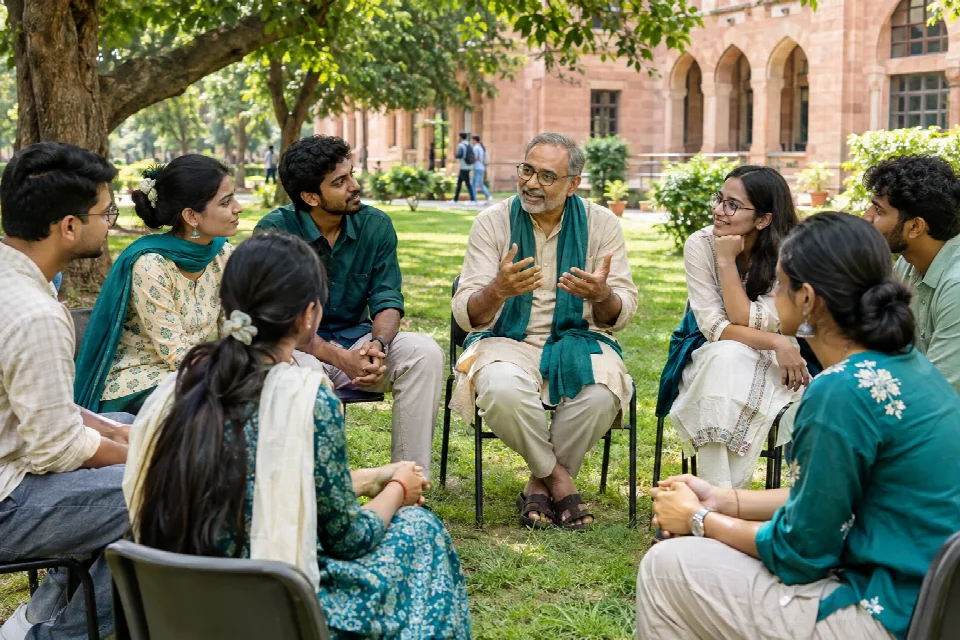
Peace education explores how people can live, learn and work together with greater understanding. It connects respect, dialogue and thoughtful responses to disagreement with everyday relationships in classrooms, institutions and communities. For IPED Foundation, peace is closely connected with education, equality and the dignity of every person.
This area of focus encourages learning that helps people examine assumptions, listen across differences and recognise their responsibility towards others. It is an invitation to build understanding through participation and to carry that learning into everyday relationships.
Dialogue as a learning practice
Listening is an active skill. A well-facilitated conversation gives people time to express a perspective, ask questions and reflect on what they have heard. Clear expectations for respectful participation can help make disagreement a source of learning rather than personal attack.
Possible learning formats include small-group dialogue, case discussion, reflective writing and collaborative tasks. The choice should suit the age, experience, language and context of the participants.
Themes that connect peace with everyday life
- Human dignity, equality and respect for different experiences.
- Listening, empathy and communication across disagreement.
- Inclusion and responsible participation in shared spaces.
- Reflection on prejudice, assumptions and the language we use.
- The relationship between education, cooperation and social responsibility.
The Foundation’s interest is educational and constructive. Activities should help participants think critically and act respectfully without encouraging hostility towards any community or viewpoint.
Working with educators and institutions
Peace-related learning becomes more relevant when it connects with the setting in which people meet every day. Educators can contribute questions from teaching and student life; institutions can identify the kinds of dialogue their communities need.
A collaboration proposal can describe the learning purpose, participant group and expected format. Facilitation, permissions, safeguarding and the boundaries of discussion should be considered before a programme is confirmed. Sensitive matters may require appropriate professional support beyond an educational activity.
Reflection, care and continuing learning
A participant should be able to contribute without being pressured to reveal a personal experience. Facilitators need to recognise that the same topic may affect people differently. Respect for privacy and thoughtful communication are therefore part of the learning environment.
Review can explore what participants understood, which questions remain and how future conversations could be more inclusive. Public updates should explain the educational activity and its context without making unsupported claims about changes in attitudes or behaviour.