
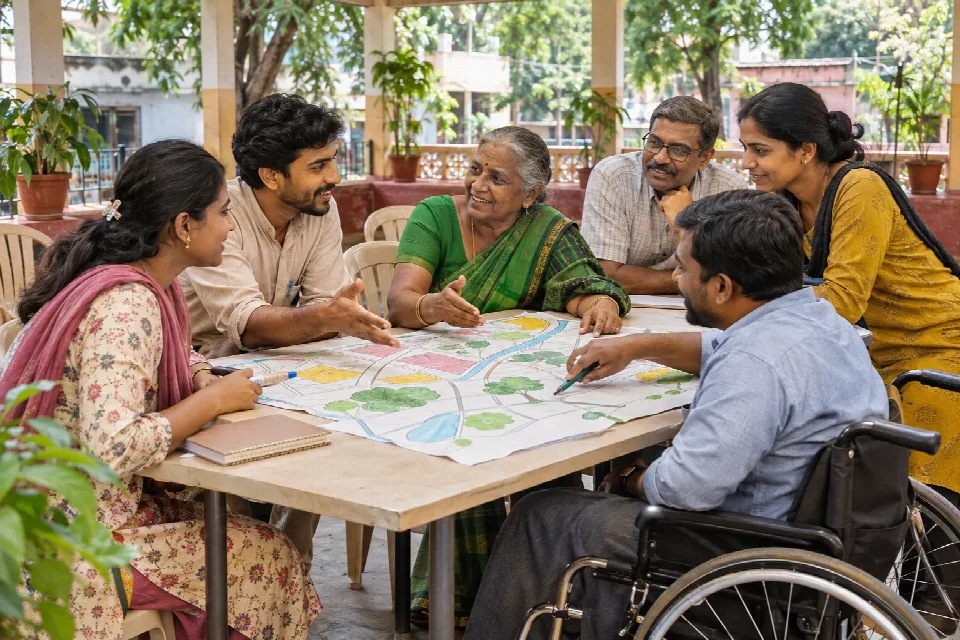
Community development begins with people having a meaningful voice in the decisions that affect their lives. IPED Foundation’s focus connects social awareness, education and community participation with the wider goal of inclusive development. We see residents as contributors with knowledge, experience and ideas, rather than as passive recipients of support.
Our approach places human dignity, equality and local priorities at the centre of collaboration. A useful initiative should respond to an understood need, make space for different perspectives and leave people better able to participate. This area brings together the Foundation’s interests in social service, shared learning and sustainable progress.
Listening before planning
Every community has its own strengths, relationships and practical constraints. Listening helps distinguish an immediate concern from a longer-term priority. Discussions with residents, local educators and community groups can reveal what people consider useful, what resources already exist and which barriers deserve attention.
For a proposed collaboration, the first conversation should establish the people involved, the issue to be explored and a realistic next step. Solutions work better when communities can question, shape and contribute to them. The aim is shared understanding, rather than arriving with a fixed answer.
Priorities for inclusive participation
Participation needs more than an invitation. Timing, language, physical access, confidence and family responsibilities can all affect who is able to contribute. A thoughtful activity makes room for women, young adults, older people and persons with disabilities to express their priorities with dignity.
- Community conversations that welcome different experiences and viewpoints.
- Accessible learning and social-awareness opportunities in locally useful formats.
- Intergenerational exchange that values both lived experience and new ideas.
- Collaboration with local groups without replacing their voice or leadership.
These priorities help shape an inclusive approach; the details of each initiative must reflect its participants and setting.
Turning shared priorities into practical action
Community-focused activity can take many forms: a facilitated discussion, a learning workshop, an awareness resource, a youth-led enquiry or a jointly planned local initiative. The format can be chosen together to fit the community’s priorities and the contribution available.
A practical proposal explains the purpose, responsibilities, resources, timeframe and way to gather feedback. Starting with a manageable activity makes it easier to learn what works, notice who is missing and decide whether further work is useful. Follow-up matters as much as the first meeting: participants should understand what was agreed and what happens next.
Dignity, consent and responsible communication
People should not have to give up their privacy to take part in a community initiative. Personal information, photographs and individual stories need a clear purpose and appropriate permission. Public communication should explain the work respectfully and avoid reducing a person or neighbourhood to a problem.
The Foundation’s public pages distinguish illustrative visuals from documented activities. Named case stories, identifiable participant photographs and project results should be shared only with the relevant permission and review. Community feedback should also be able to influence how an initiative is described, not simply how it is delivered.
Learning from participation
A useful review looks beyond the number of people who attended. It asks whether participants could contribute, whether the activity was relevant and what practical learning emerged. Feedback from residents and collaborators can help identify changes in understanding, confidence or the quality of local cooperation.
Approved activity updates will be published with context, including dates, locations and the basis of any reported result. Where information is still being checked, it should remain separate from verified achievements. This keeps the focus on credible learning and responsible improvement.
Start a community conversation
Residents, educators, volunteers and institutions can contact IPED Foundation with a community question or an idea for collaboration. Share the proposed location, the people you hope to involve, the need you have observed and the contribution you can offer. The office can then discuss fit, responsibilities and possible next steps.
Submitting an idea begins a conversation. Activity dates, commitments and resource requirements are agreed separately before an initiative is announced.